A History of Metal Shingles
Metal roofing in America has a storied past stretching back to Thomas Jefferson's time, but it was the Victorian era that truly transformed metal shingles into an art form. From the embossed tin shingles of the 1880s to today's modern reproductions, these decorative roofing materials have adorned everything from modest farmhouses to grand estates across America.
Example Gallery
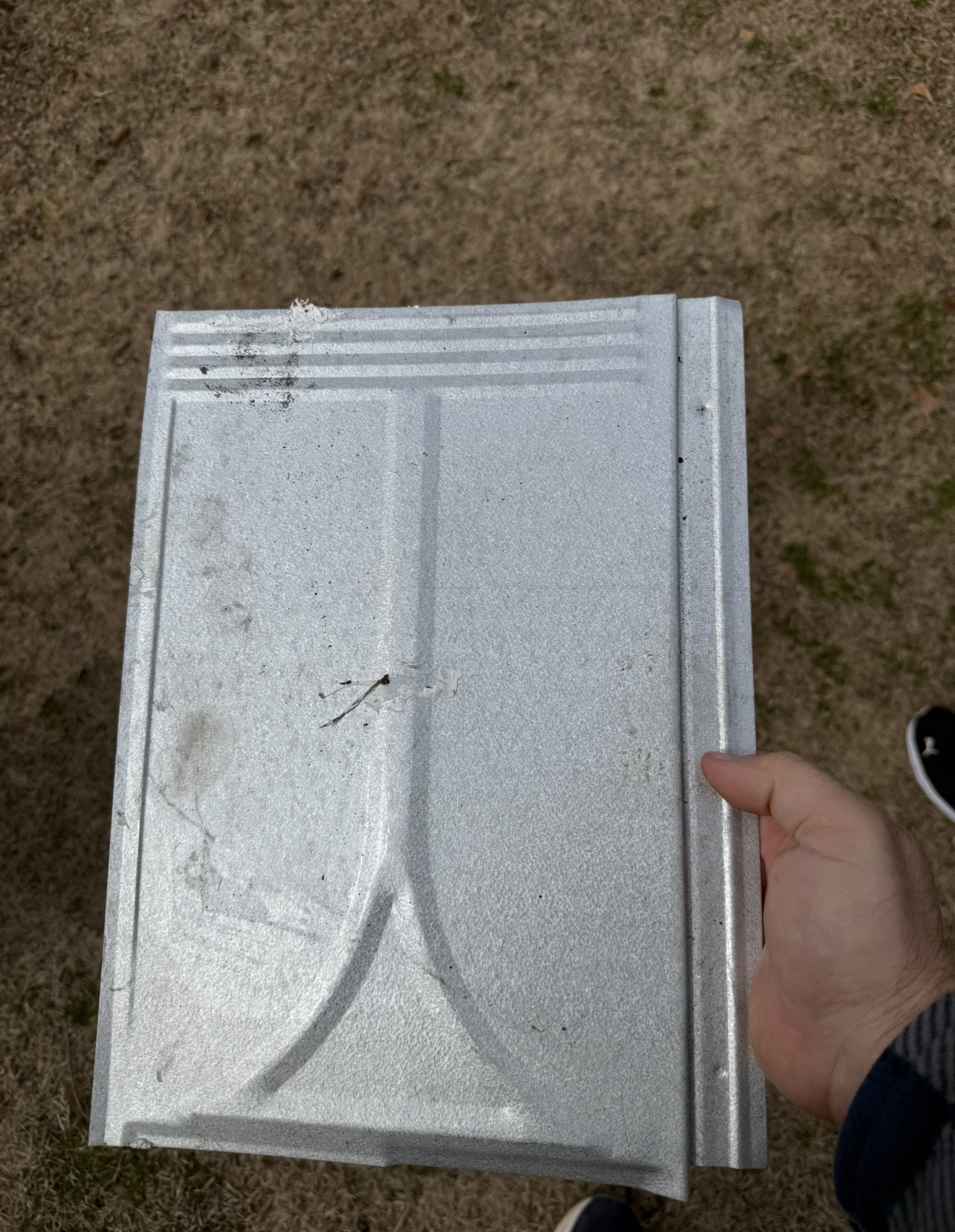
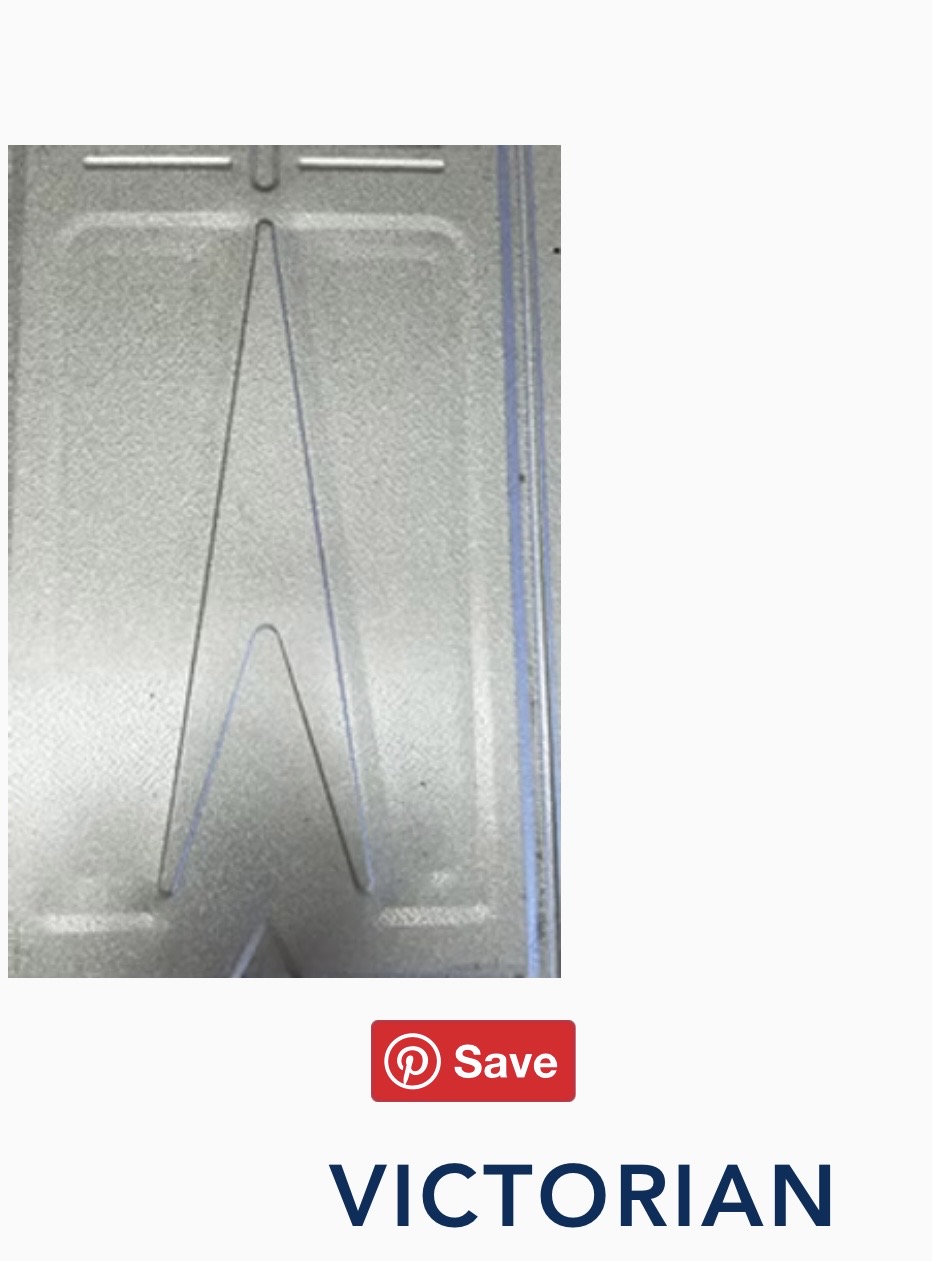
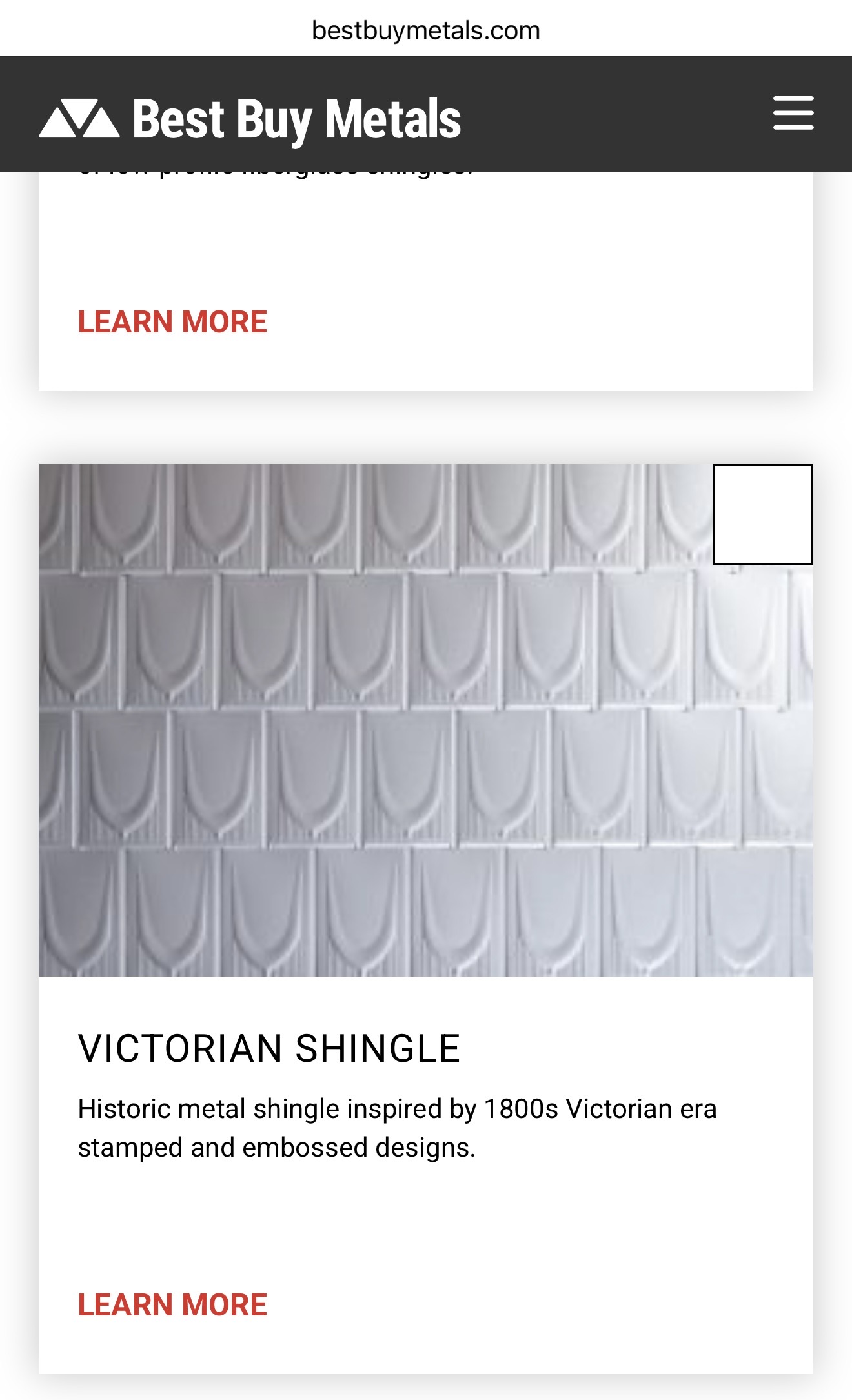
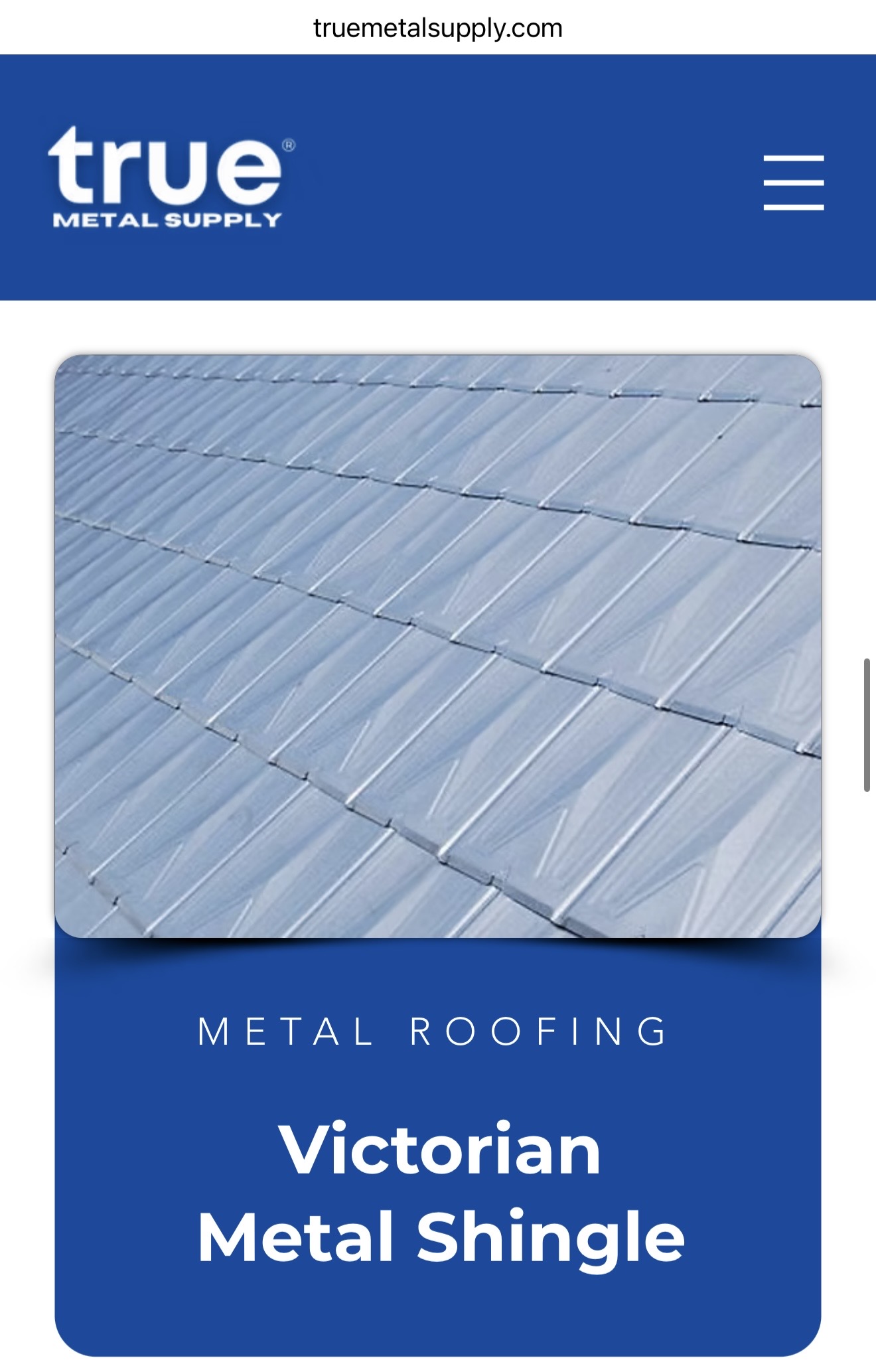
Current Market Pricing (April 21, 2026)
The metal shingle market shows significant price volatility, with costs ranging dramatically depending on manufacturer, pattern complexity, and finish. Here's a snapshot of pricing as of April 21, 2026:
Metal Shingle Pricing Comparison
| Manufacturer | Price per Square | Shingles per Square | Notes |
|---|---|---|---|
| Metalshinglesllc.com | $280/sq + shipping | 138 shingles | Contact: Jennie@piedmontpaving.com |
| Bestbuymetals.com | $350/sq | 138 shingles | Victorian pattern |
| Truemetalsupply.com | $380/sq | Varies | 24 or 26 gauge options |
| Berridge | $471/sq + $160 palleting + shipping | Varies | Atlanta: 770-941-5141 |
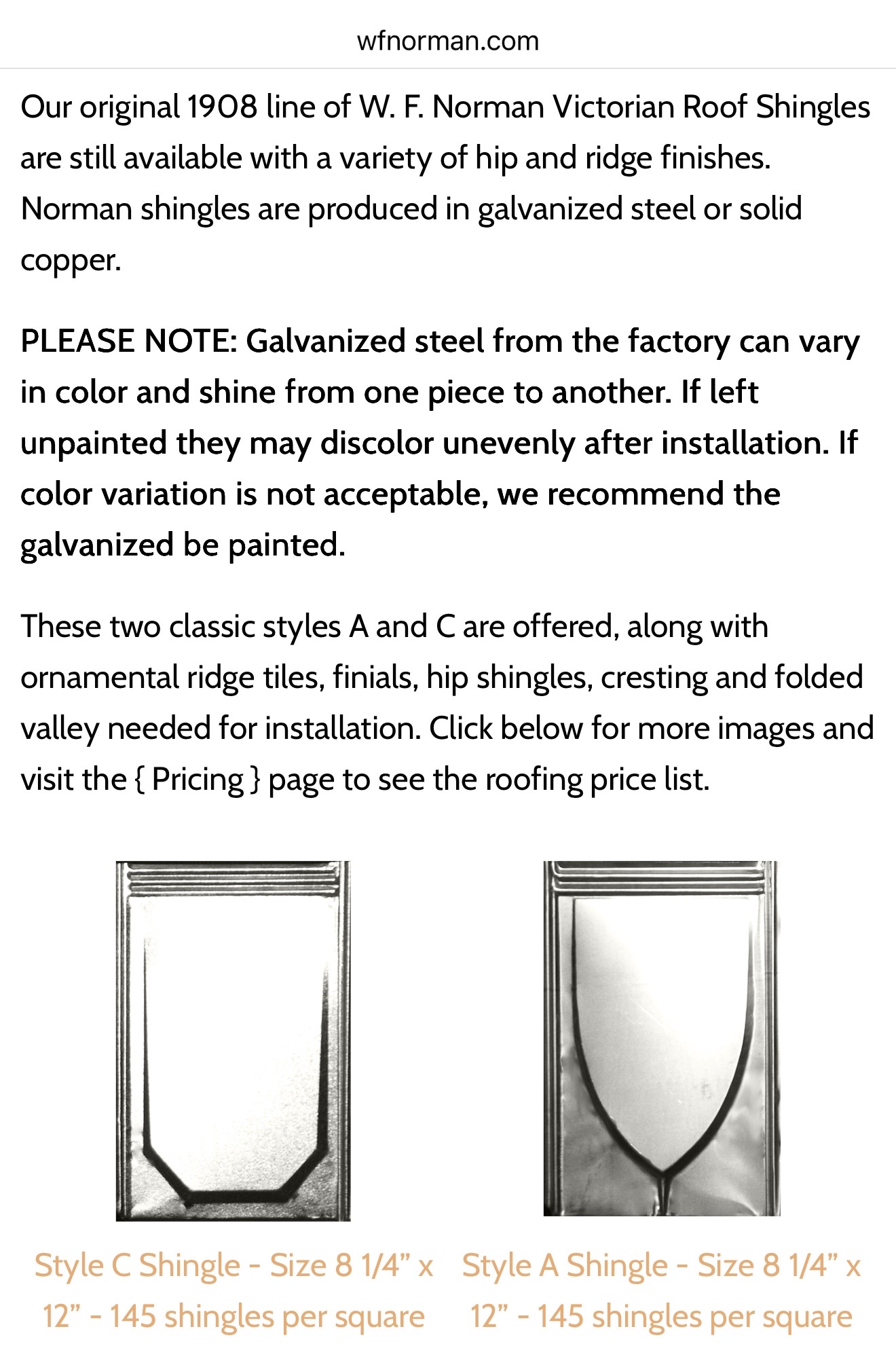
| W.F. Norman | $4.95/shingle ($718/sq) |
145 shingles (Style A) | Original equipment, galvanized or copper |
Note: This represents a 250% price range from lowest ($280) to highest ($718) per square, demonstrating significant market volatility and variation in manufacturing methods, materials, and authenticity.
Understanding the Price Differences
The dramatic price variation reflects several factors:
- Manufacturing Method: W.F. Norman uses original 1898-era drop hammers and hand-crafting techniques, while modern manufacturers use automated presses
- Material: True galvanized steel (with zinc spangle) versus Galvalume (55% aluminum/zinc alloy with shinier, silvery finish)
- Gauge: 24-gauge (thicker, more expensive) versus 26-gauge (thinner, more economical)
- Pattern Complexity: The Cortright upside-down Y slate pattern requires more complex tooling than simpler diamond or fish-scale designs
- Authenticity: Historic reproduction versus modern interpretation
The Early Days: Hand-Crafted Beginnings
When Thomas Jefferson roofed the University of Virginia in 1822 with tinplate shingles, he complained bitterly about the exorbitant price and promptly built his own bending machine from "two boards hinged together" for just 50 cents. Other early examples include the Arch Street Meetinghouse (1804) in Philadelphia with tin shingles laid in herringbone pattern, and Hyde Hall (1829) in New York.
Until the late 19th century, metal shingles were handmade by skilled craftsmen called "brightsmiths." Usually edge-folded and installed with clips, simple metal-shingled roofs became common by the 1850s.
The Golden Age: Embossed Tin Shingles (1880s-1920s)
The invention of sheet metal galvanization in the 1830s revolutionized metal roofing by protecting it from corrosion, and in 1857, the first galvanized steel roof was installed in North America. But the real transformation came in the late 19th century with the development of stamping presses that could emboss tin and terne into shingles with distinctive decorative patterns.
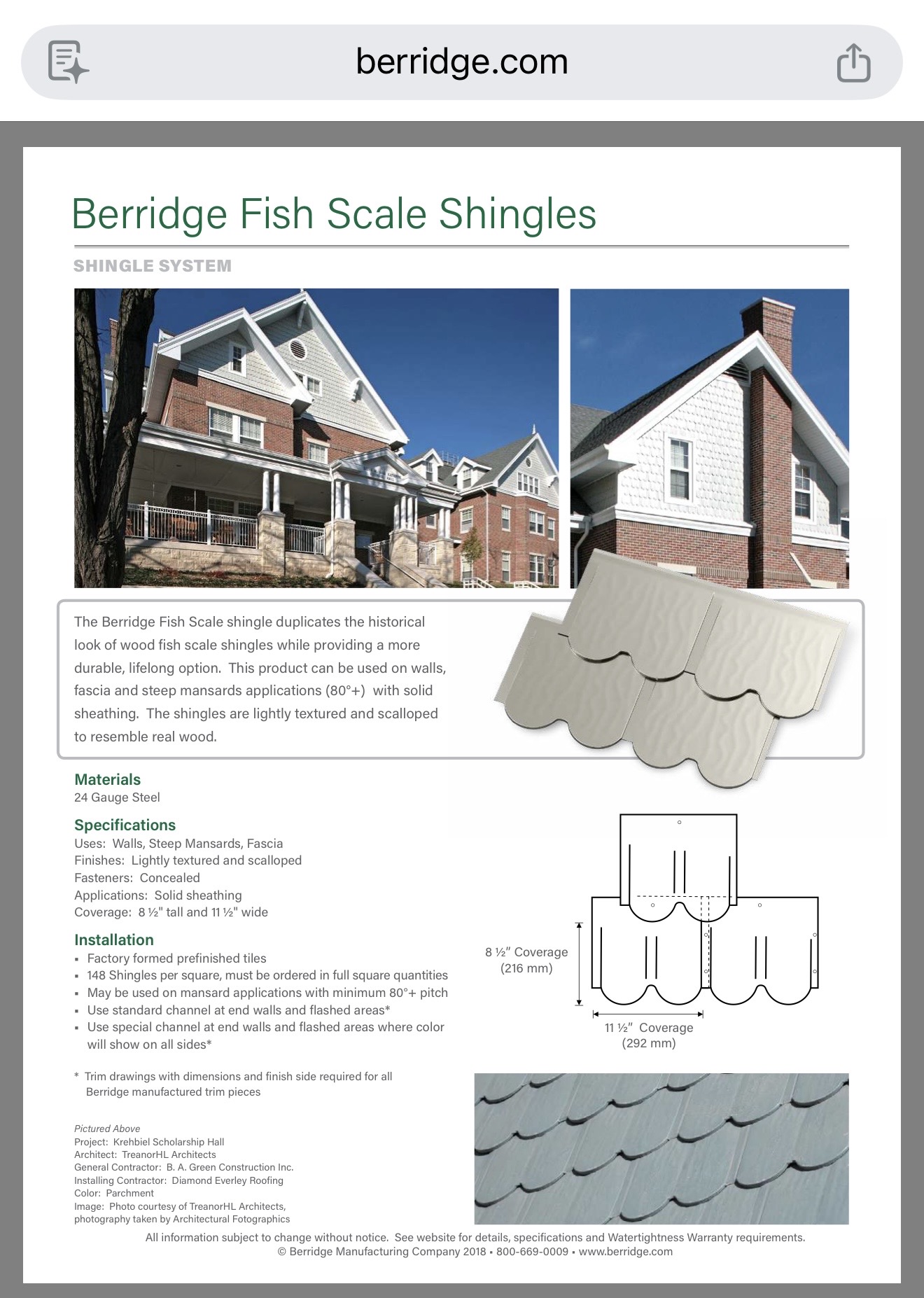
From the 1880s to the 1920s, tin shingles proved enormously popular, valued for their light weight, low maintenance, fire resistance, and relatively low cost. These Victorian-era shingles seldom measured larger than 9×12 inches and featured diamond, fleur-de-lis, scalloped, and fish-scale patterns.
Cortright Metal Roofing Company: The Philadelphia Pioneer
Among the most influential manufacturers of this era was the Cortright Metal Roofing Company of Philadelphia (with operations also in Chicago). Based in Philadelphia, Cortright was one of the pioneers that helped shape modern roofing systems and marketing for durable, weather-resistant metal roofing.
The Cortright Innovation
In 1902, Cortright Metal Roofing advertised their stamped shingles with a compelling value proposition: they were "designed to avoid the heaviness, the expense and fragility of slate roofs; to avoid the lack of wearing qualities in the wood shingle, and provide a substitute for the 'buckling', rattling and expensive economy of the tin roof and to increase the beauty of a roof."
Cortright's catalogs from the 1890s show an impressive range of products including:
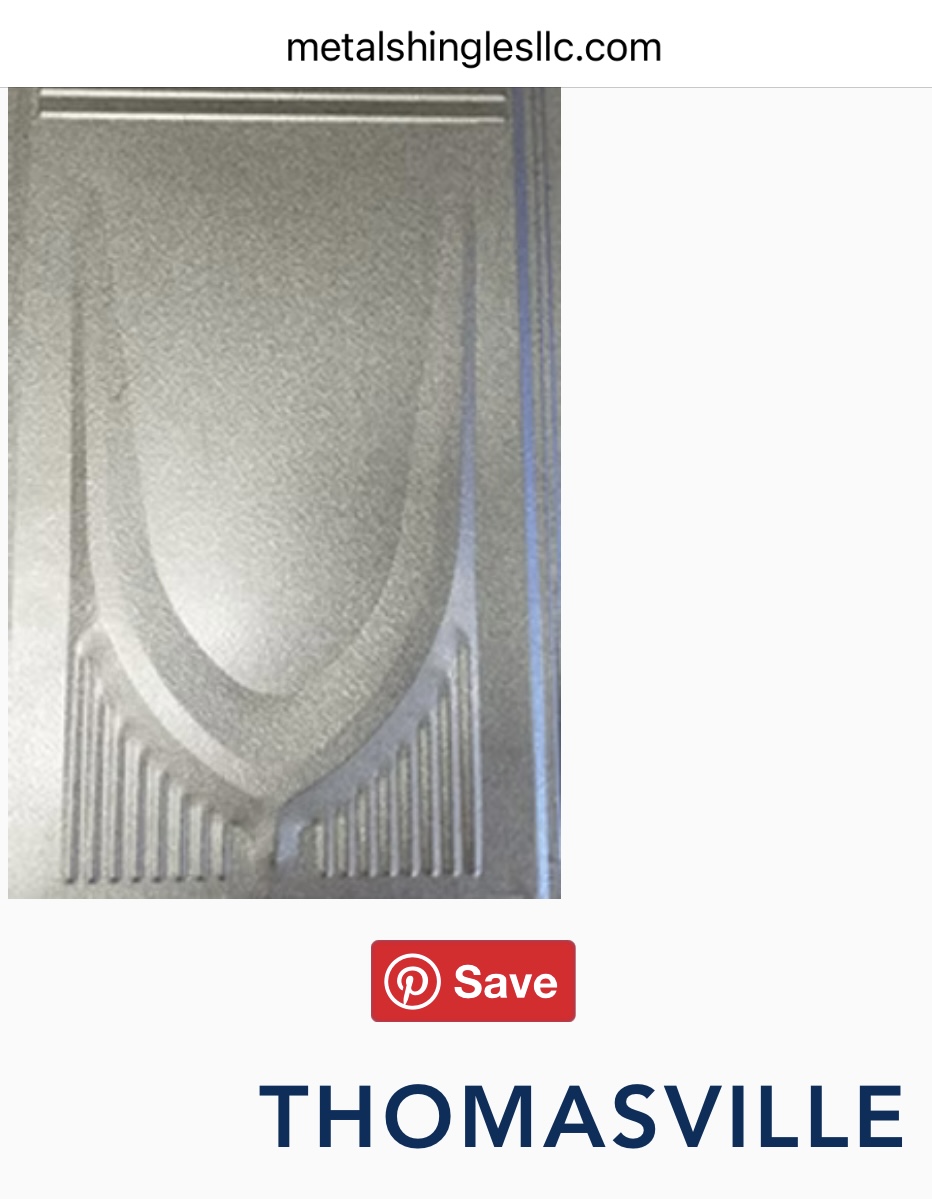
- Metal Slates - The famous upside-down Y pattern that became one of their signature designs
- Victoria Shingles - A raised shingle design featured in Scientific American in June 1894
- Oriental Pattern - An intricate embossed design that survives on historic buildings today
- Various diamond, fish-scale, and decorative pressed patterns
The Upside-Down Y "Slate" Pattern
Cortright's metal slates featured a distinctive upside-down Y pattern that became one of the most recognizable Victorian metal shingle designs. This pattern elegantly mimicked the appearance of natural slate while offering significant advantages:
- Weighed a fraction of actual slate (which required heavy structural support)
- Could expand and contract with temperature changes, ensuring a weatherproof roof
- Provided the prestige and beauty of slate without the expense or fragility
- Was fire-resistant and required minimal maintenance
By 1915, which was late in the embossed tin shingle era, Cortright had standardized production. The shingles measured 10″ × 14″, though pre-1900 they were typically available in three sizes (small, medium, and large).
Cortright's Legacy and Decline
Cortright Metal Roofing Company was prominently featured in trade publications and catalogs throughout the early 1900s. A 1914 vintage Cortright Metal Roofing Co. sign proudly advertised "The Ideal Roofing" when metal shingles were transforming American architecture.
The last reference to the company was from 1933, though Cortright shingles were referenced until 1940 for sale by distributors in Kentucky. Several factors contributed to the decline:
- The Great Depression pushed homeowners toward cheaper alternatives
- Asphalt composition shingles, developed in the 1890s, became inexpensive to manufacture
- World War II diverted all metal to the war effort, effectively ending the embossed tin shingle era
- Within a few decades, asphalt shingles captured up to 90% of the residential market
W.F. Norman: Keeping the Tradition Alive
While Cortright and many other manufacturers faded into history, one company has preserved the craft. The W.F. Norman Sheet Metal Manufacturing Company was founded in 1898 in Nevada, Missouri, by William Franklin Norman.
W.F. Norman is the only U.S. shop still stamping Victorian pressed-metal shingles on the original drop hammers using patterns from 1908. They continue to produce cluster shingles, fish-scale, diamond, and hexagon patterns in actual galvanized steel or solid copper, complete with matching hip and ridge pieces.
In 1978, grandson Franklin Norman sold the business to Robert Quitno, but the company continues to operate using the same equipment and techniques from over 125 years ago.
Modern Manufacturers: Reviving Victorian Elegance
Today, several manufacturers produce Victorian-style metal shingles inspired by the historic patterns of Cortright, Wheeling Corrugating, and other pioneers:
Berridge Manufacturing
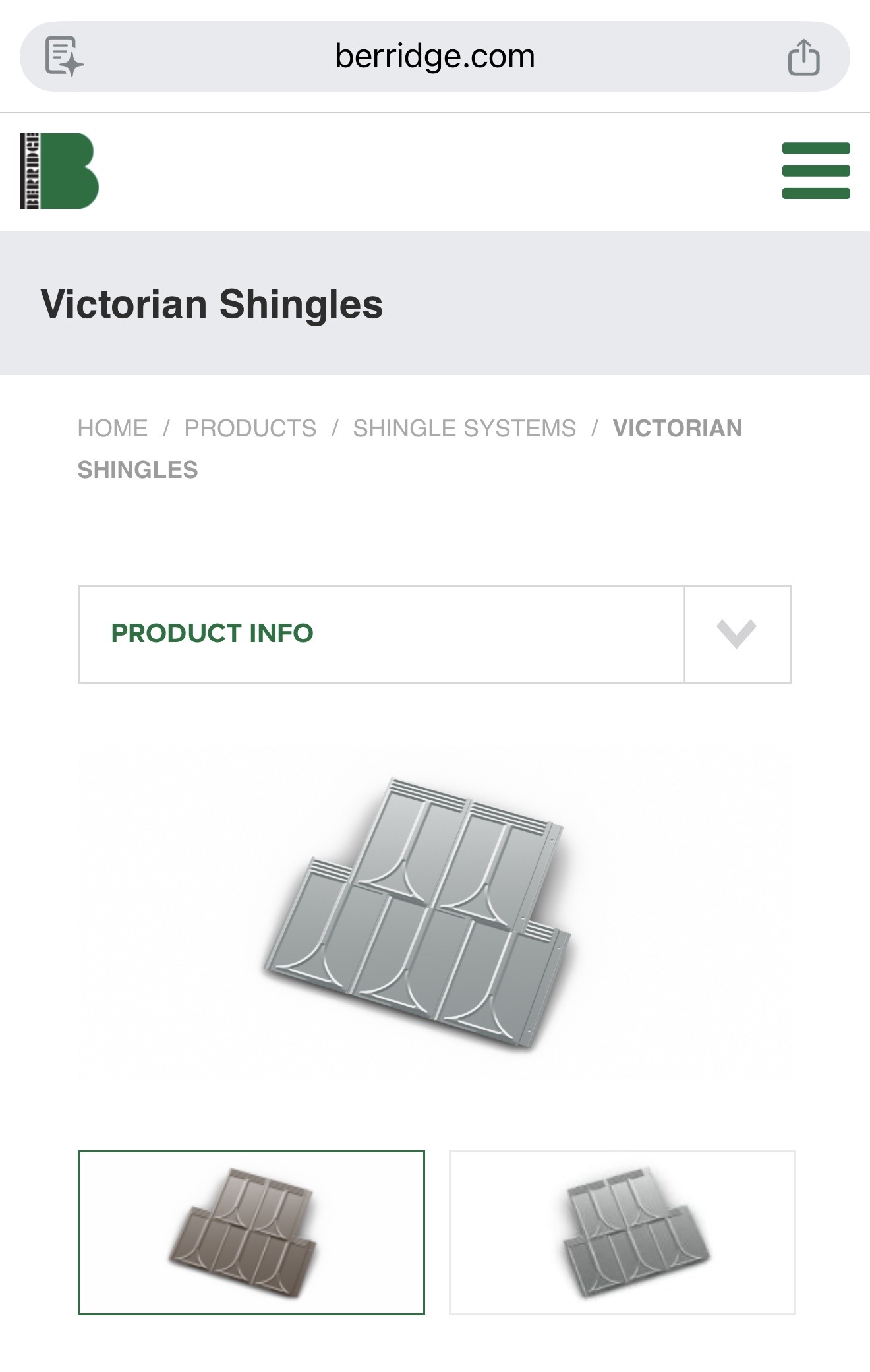
Berridge makes both a Victorian Shingle and a Fish Scale Shingle in 24-gauge steel. Notably, Berridge produces a copy of the Cortright upside-down Y pattern, though it's smaller than the biggest two of the three original Cortright options. Berridge shingles are available in Acrylic-Coated Galvalume (mill-look) or painted finishes.
However, there are visual differences between Berridge's modern version and antique Cortright shingles. The Berridge roof edging features a "lip" or "drip edge" for a smooth appearance, while traditional embossed tin shingles used the bottom side of the shingles as the roof edge, which over decades may develop a characteristic warping line.
Other Contemporary Suppliers
- Metal Shingles LLC (Atlanta, GA) - Custom-stamped Victorian diamond-pattern shingle in 26-gauge Galvalume
- Best Buy Metals (Chattanooga, TN & Dalton, GA) - Victorian Shingle inspired by 1800s patterns in Galvalume mill finish
- True Metal Supply (Knoxville, TN) - Victorian Metal Shingle in 24- or 26-gauge with fish-scale, diamond, and horseshoe embossed patterns
- Heather & Little (Ontario, Canada) - High-end custom restoration shop fabricating diamond and fish-scale patterns
Preservation and Restoration
For owners of historic homes with original Cortright or other Victorian metal shingles, preservation is often preferable to replacement. With modern coatings, these 100+ year-old roofs can be saved and protected for decades more. The underside of vintage shingles often remains in excellent condition even when the top shows wear, making them excellent candidates for preservation.
When mixing old and new shingles on the same roof, experts recommend:
- Always have some divider between the two versions
- Use different roof slants (such as a porch surface) to separate them
- Apply thoughtful color coating—either the same tint or complementary colors
Resources for Further Research
For those interested in learning more about Victorian metal shingles and sourcing options:
- Cortright Document on Metal Shingles and Metal Slates
- Berridge Shingles Versus Old Style - Detailed comparison by Miriam of Roof Menders
- Where to Buy Metal Shingles - Comprehensive sourcing guide
- The Life, Death & Reinvention of Metal Shingles - Complete industry history
- History of Victorian Metal Roof Tiles & Shingles - Heather & Little restoration experts
The Future of Metal Shingles
Today's metal shingle industry continues to evolve, with advances in coatings, thermal performance, and aesthetic realism. Modern "print coat" paint finishes allow multiple colors on a single panel, creating even more realistic wood and slate appearances.
Yet the fundamental appeal remains unchanged from Cortright's 1902 promise: metal shingles offer beauty, durability, and fire resistance without the weight and expense of natural materials. From Thomas Jefferson's 50-cent bending machine to today's computer-controlled presses, the spirit of innovation that defined the Victorian metal shingle era continues to shape the industry.